Her doctoral research also brought her into the world of visual science storytelling. She worked alongside the late filmmaker and mountaineer David Breashears on expeditions documenting glacier change in the Himalaya, using repeat photography to reveal dramatic changes in the landscape over time. These experiences helped shape her belief that science has its greatest impact when it connects people personally to the places and changes being studied.
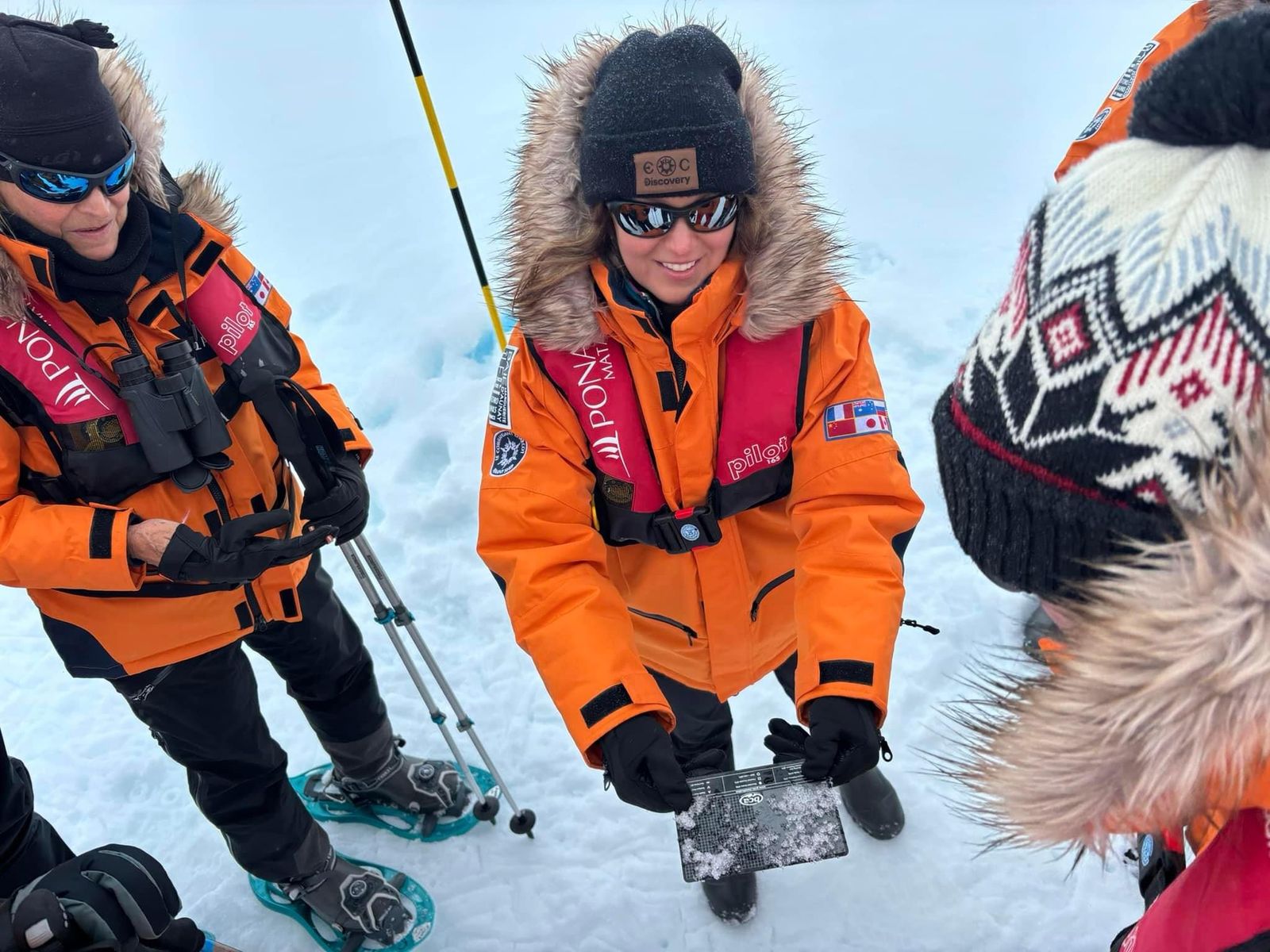
Today, Ulyana collaborates with researchers working in the Arctic and Antarctic, investigating persistent pollutants (including black carbon, microplastics, and PFAS ("forever chemicals")) in snow, glacier ice, sea ice, and seawater. Her fieldwork has taken her from Greenland and Svalbard to Antarctica and across the high Arctic, including the Geographic North Pole. She collaborates not only with scientists, but also Indigenous communities, educators, students, and expedition partners to investigate how pollution and climate change are transforming some of the world's most remote environments. Her recent work on persistent pollutants has been supported by NASA.
Equally important is her commitment to bringing science beyond academia. As Head of Science Communication for the North Central Climate Adaptation Science Center at the University of Colorado Boulder and founder of Science in the Wild, Ulyana translates complex science into compelling, accessible information for policymakers and the public. Her field science and exploration have also brought her to the screen: she is featured in the PBS series Ages of Ice (2026), filmed on location in New Zealand, and in a documentary (2023) following an expedition into the remote Andes connected to the story and legacy of the 1972 Andes plane crash. The expedition carries a deeply personal connection: her husband, Ricardo Peña, discovered the jacket of crash survivor Eduardo Strauch during an expedition to the site in 2005. This discovery helped forge lasting relationships with the survivors and ultimately led to Ricardo guiding return expeditions to the crash site. Ulyana has since joined him in assisting with these journeys, bringing together exploration, history, and the extraordinary human story of survival in one of the world's most remote mountain environments.
Together, Ricardo and Ulyana created Summits, Songs and Science, a project combining exploration, fitness, science and music with the goal of climbing the Seven Summits (the highest peak on each continent), all 50 U.S. state highpoints, and Colorado’s 100 highest peaks. Through their adventures in the mountains, they promote physical fitness, share the joy of music, and encourage curiosity, critical thinking, and a deeper appreciation for the natural world.