Science

Ulyana's work spans glaciology, climate change, pollution, planetary science, and science communication. Her research has taken her from the Himalaya to the Arctic and Antarctic, while her writing focuses on making science accessible to audiences beyond academia.

Current Research

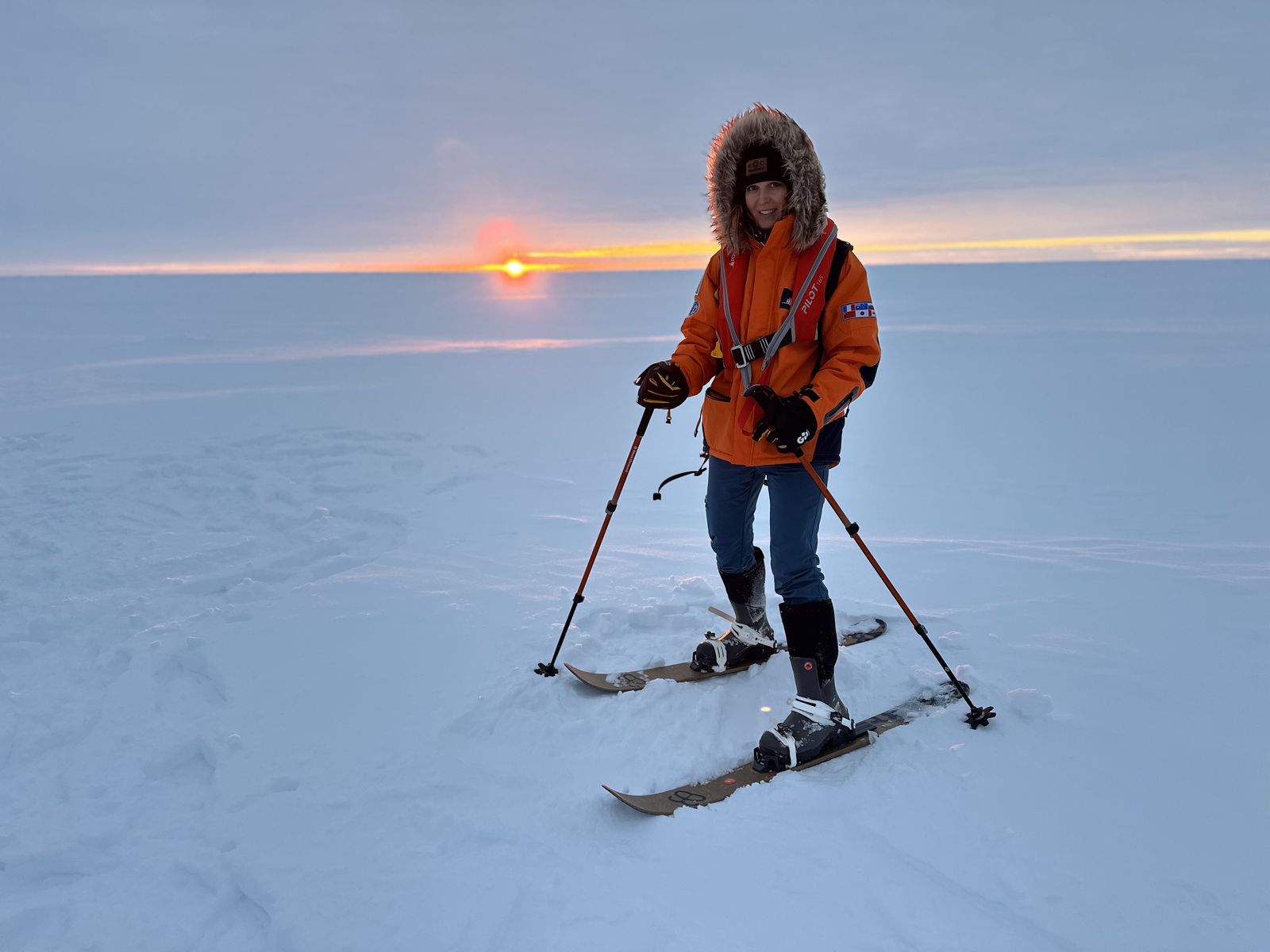
Polar field research on snow and sea ice

Persistent Pollutants in the Cryosphere

Ulyana's current research investigates the presence and movement of human-made pollutants in some of Earth's most remote environments. Her work focuses on black carbon, microplastics, PFAS ("forever chemicals"), and other light-absorbing particles in snow, glacier ice, sea ice, and seawater, in collaboration with researchers at Ocean First Institute, the University of Alaska Fairbanks and the University of North Carolina Charlotte.

Her recent fieldwork has included sampling in the Arctic Ocean, as well as research in Antarctica, Greenland, the Canadian Arctic, Iceland, and high-elevation mountain environments including the Himalayas, Alps and Andes.

In 2025, NASA funded Ulyana's Persistent Pollutants project, which combined Arctic field research with community and student participation in Shishmaref, Alaska. The project integrates measurements of microplastics and light-absorbing particles with NASA Earth observations and educational programs connecting Arctic communities with ongoing environmental research.

Learn more about the Persistent Pollutants project
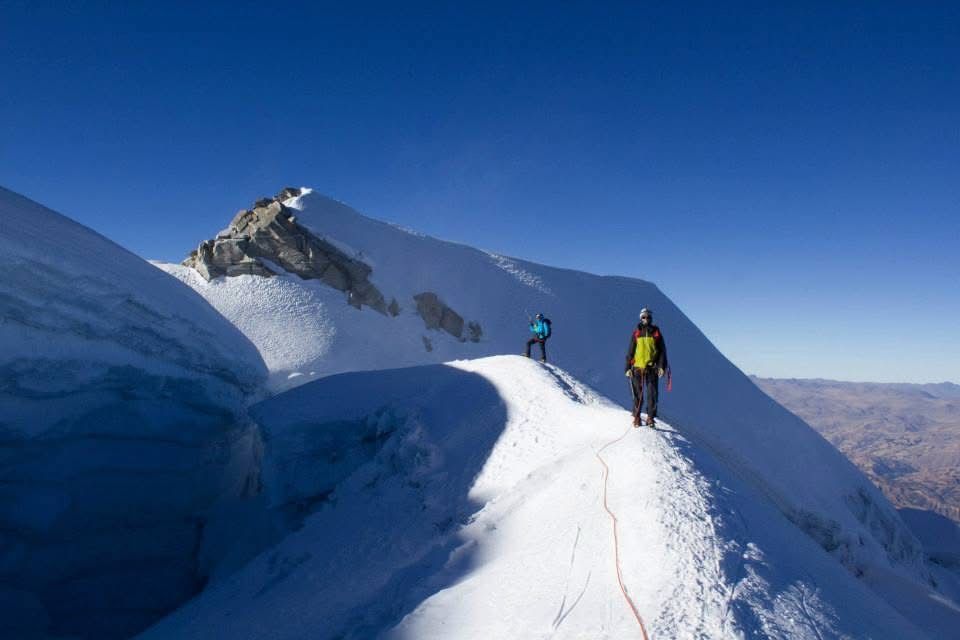
Alpine glacier fieldwork in a mountain environment

Glaciers & The Changing Climate

Ulyana's research began in the Himalaya, where she studied the evolution of supraglacial lakes on debris-covered glaciers and the hazards associated with glacial lake development and flooding. Her Ph.D. research at the University of Colorado Boulder combined field observations, instrumentation, satellite remote sensing, and repeat photography to document rapidly changing glacier systems in the Mount Everest region.

Her work continues to examine changes in the cryosphere and the ways field observations, historical imagery, and modern satellite data can reveal environmental change over timescales ranging from years to more than a century.

She is expanding this work as newly named lead scientist for GlacierWorks, to document changes in glaciers and high-mountain landscapes by returning to locations photographed during early expeditions and comparing those historical views with the mountains today. This work helps make decades of glacier retreat and landscape transformation visible while providing a powerful bridge between scientific research, historical records, and public understanding.

Read Ulyana's doctoral research
Read about GlacierWorks

Selected Peer-Reviewed Publications

  • Horodyskyj, U.N., Thermal and Physical Investigations into Lake Deepening Processes on Spillway Lake, Ngozumpa Glacier, Nepal. Water, 9(5), 362 (2017). Read publication
  • Schmitt, C.G., Riggs, B.L., Horodyskyj, U.N., Khan, A.L., Ewing, H.A., All, J.D., Sanchez Rodriguez, W. The measurement and impact of light absorbing particles on snow surfaces. The Cryosphere Discussions (2019). Read publication
  • Wynne, J.J., Mylroie, J.E., Titus, T.N., et al., including Horodyskyj, U. Planetary Caves: A Solar System View of Processes and Products. Journal of Geophysical Research: Planets (2022). Read publication
  • Horodyskyj, U., Lee, C.-T.A., & Luffi, P. Geochemical evidence for exhumation of eclogite via serpentinite channels in ocean-continent subduction zones. Geosphere, 5, 426–438 (2009). Read publication
  • Lee, C.-T.A., Morton, D.M., Little, M.G., Kistler, R., Horodyskyj, U.N., Leeman, W.P., & Agranier, A. Regulating continent growth and composition by chemical weathering. Proceedings of the National Academy of Sciences, 105, 4981–4986 (2008). Read publication
  • Lee, C.-T.A., Cheng, X., & Horodyskyj, U. The development and refinement of continental arcs by primary basaltic magmatism, garnet pyroxenite accumulation, basaltic recharge and delamination: insights from the Sierra Nevada, California. Contributions to Mineralogy and Petrology, 151, 222–242 (2006). Read publication
  • Read more about Ulyana's research here

Co-Authorship of E-Book

Pena, U.H., Veneruso, S., Crocker, E. T., Diaz Torres, R. R., Alegado, R. A., Saikawa, E., Kar, A., & Racelis, A. E., 2024. Advancing Justice-Centered Community Science. Thriving Earth Exchange & American Geophysical Union.

Ulyana co-authored this open-access e-book exploring how scientists and communities can work together to make research more equitable, collaborative, and responsive to community priorities. It provides practical strategies for researchers seeking to engage communities ethically and meaningfully throughout the scientific process.

Read the e-book

Scientific American Blog

Ulyana has written firsthand accounts of field science for Scientific American, bringing readers along on expeditions in the Mount Everest region of Nepal.

Her 2014 dispatches documented the realities of conducting high-altitude glacier research, including her search for black carbon deposited on Himalayan snow and ice. She also wrote from Nepal during the deadly 2014 Mount Everest avalanche, providing an unusual perspective at the intersection of an unfolding mountaineering tragedy and scientific fieldwork.

Read Ulyana's Scientific American writing

Exploration & Travel Writing

Ulyana is a contributing travel writer for ExplorEarth, where she writes about science, exploration, and environmental change through the lens of firsthand experiences in some of the world's most remarkable environments.

The Day the Ice Fell: Frontline Encounters with a Melting World

Drawing on her experiences in Antarctica and other frozen environments, Ulyana explores the rapidly changing cryosphere and what the loss of the world's glaciers means for our collective future.

Read the story on ExplorEarth

The Soul of the Sea: Exploring Passion in French Polynesia and the Poles

Moving between the turquoise waters and volcanic landscapes of French Polynesia and the frozen polar seas, Ulyana explores the surprising connections between the tropics and the poles and the shared ocean system that links them.

Read the story on ExplorEarth

Essays & Commentary

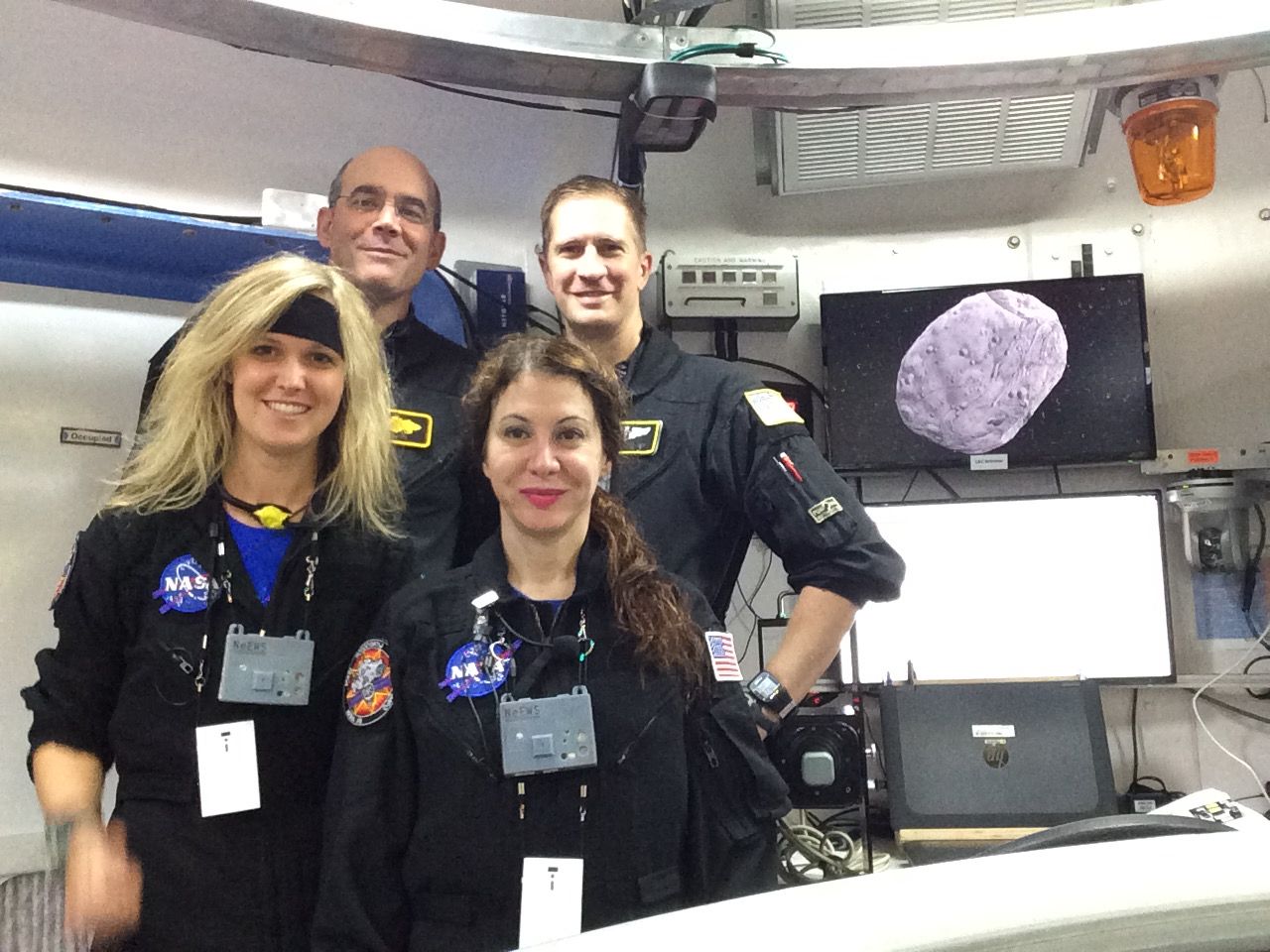
NASA HERA analog mission

Commander's Log: Reflections from NASA's Human Exploration Research Analog (HERA) XII on Leadership, Isolation and the Human Element of Analog Spaceflight

Ulyana reflects on her experience commanding a four-person crew during a 30-day NASA analog mission and the lessons it offered about leadership, isolation, teamwork, and human performance in extreme environments.

Read the essay

Book Dr. Peña at your event today!

Contact